IdeaOps is a unified "spatial" operating system designed to merge the siloed workflows of design, development, and product strategy. By replacing traditional dashboards with a floating, context-aware command interface, the platform allows cross-functional teams to generate prototypes, automate documentation, and write production-ready code through a single, natural language input.
Year
10.25
Scope
Branding, UI
Timeline
4 weeks
Live project
The Challenge & Insights Gathering
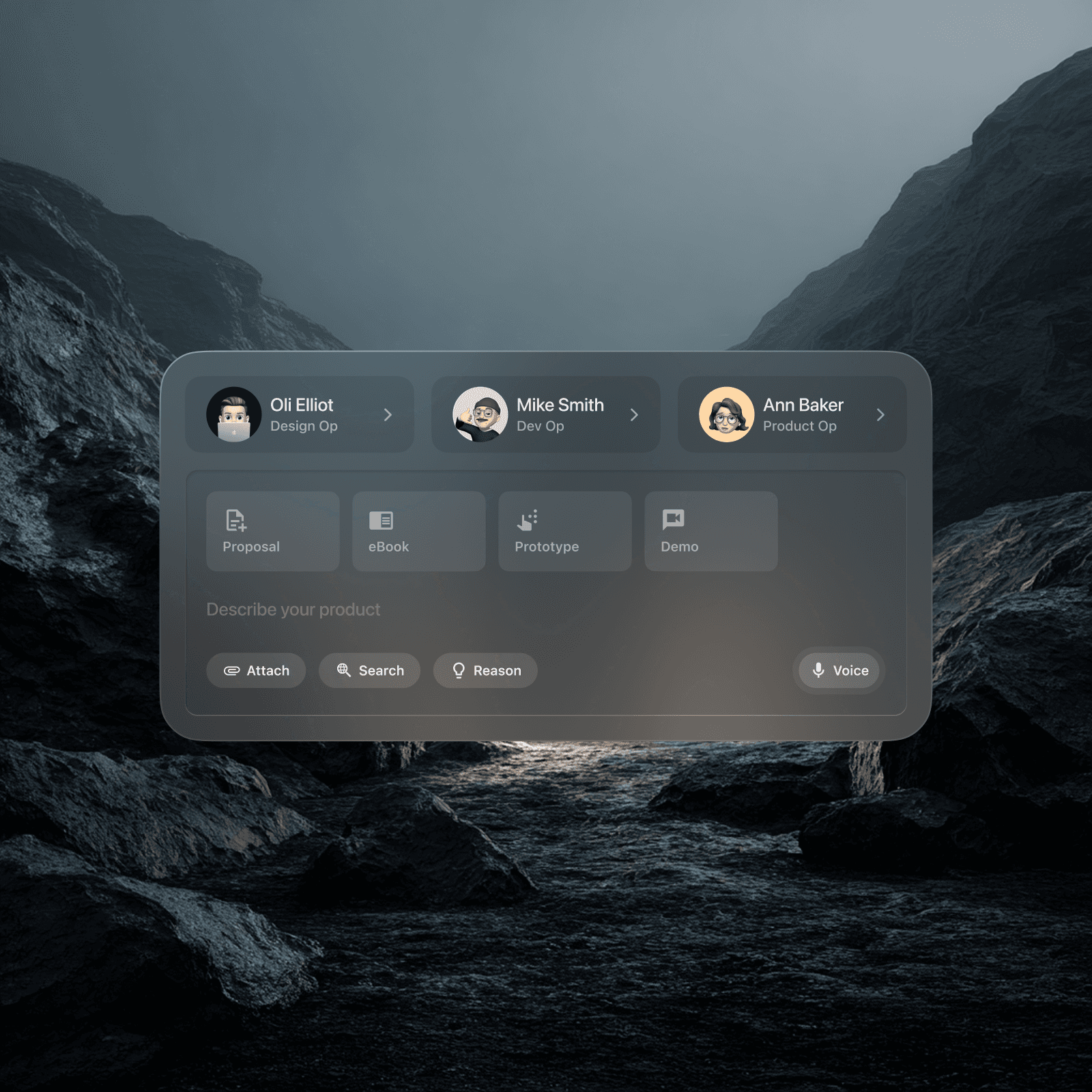
Modern product development is fractured. Designers live in canvas tools, developers in code editors, and product managers in documentation apps. This context switching creates massive friction. Discovery & The "Silo" Problem We analysed high-velocity product teams and discovered that 40% of "work" was simply translating assets between tools (e.g., turning a meeting note into a ticket, or a design into swift code). The objective became engineering a "Product OS" that sits above these tools—a unified layer where a Designer, Developer, and PM could collaborate using the same interface to trigger different outcomes.
Defining the Ecosystem: Personas & Roles
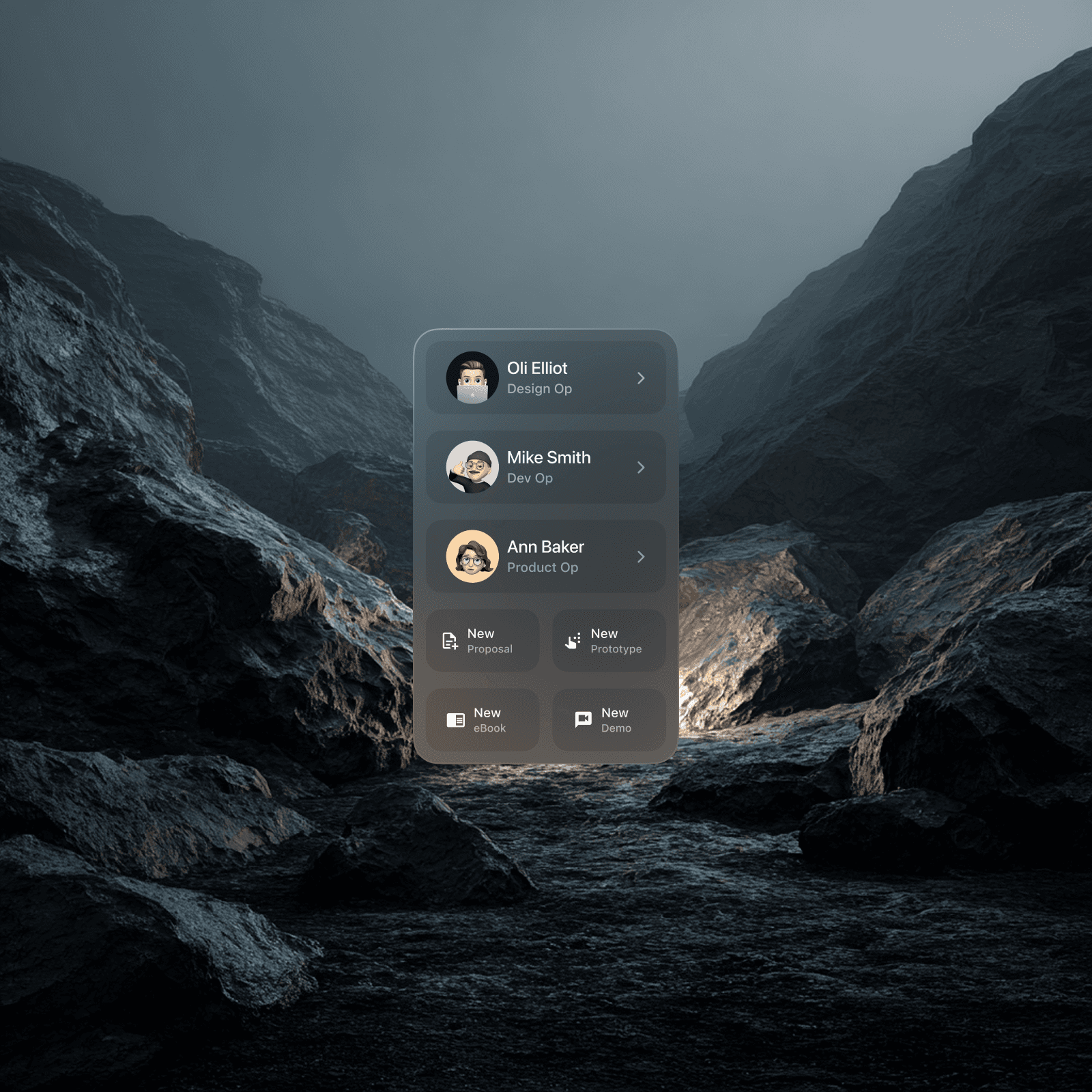
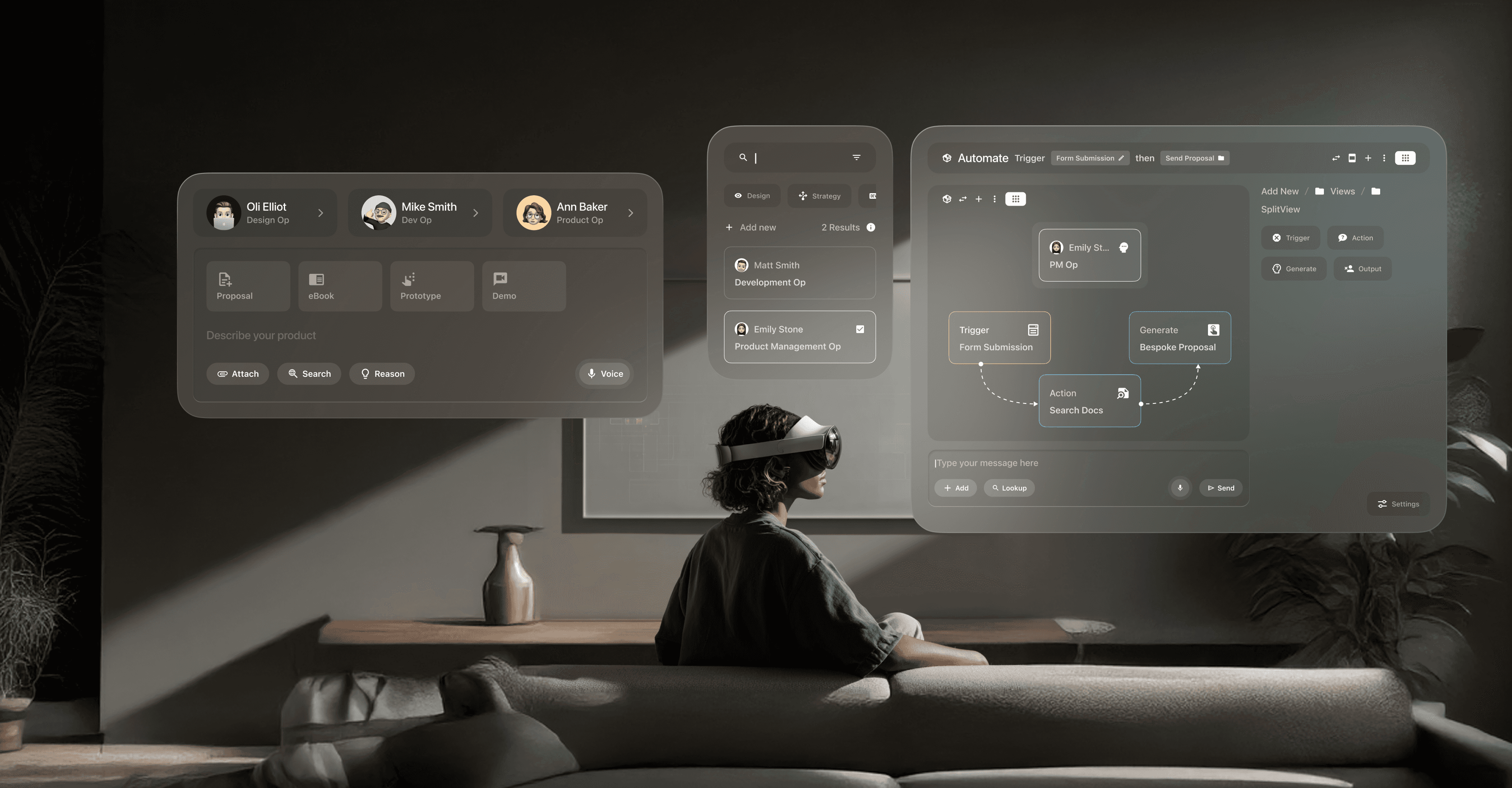
To structure the platform, we defined "Ops" (Operations) as distinct modes within the same system.



Iteration & Strategic Pivoting
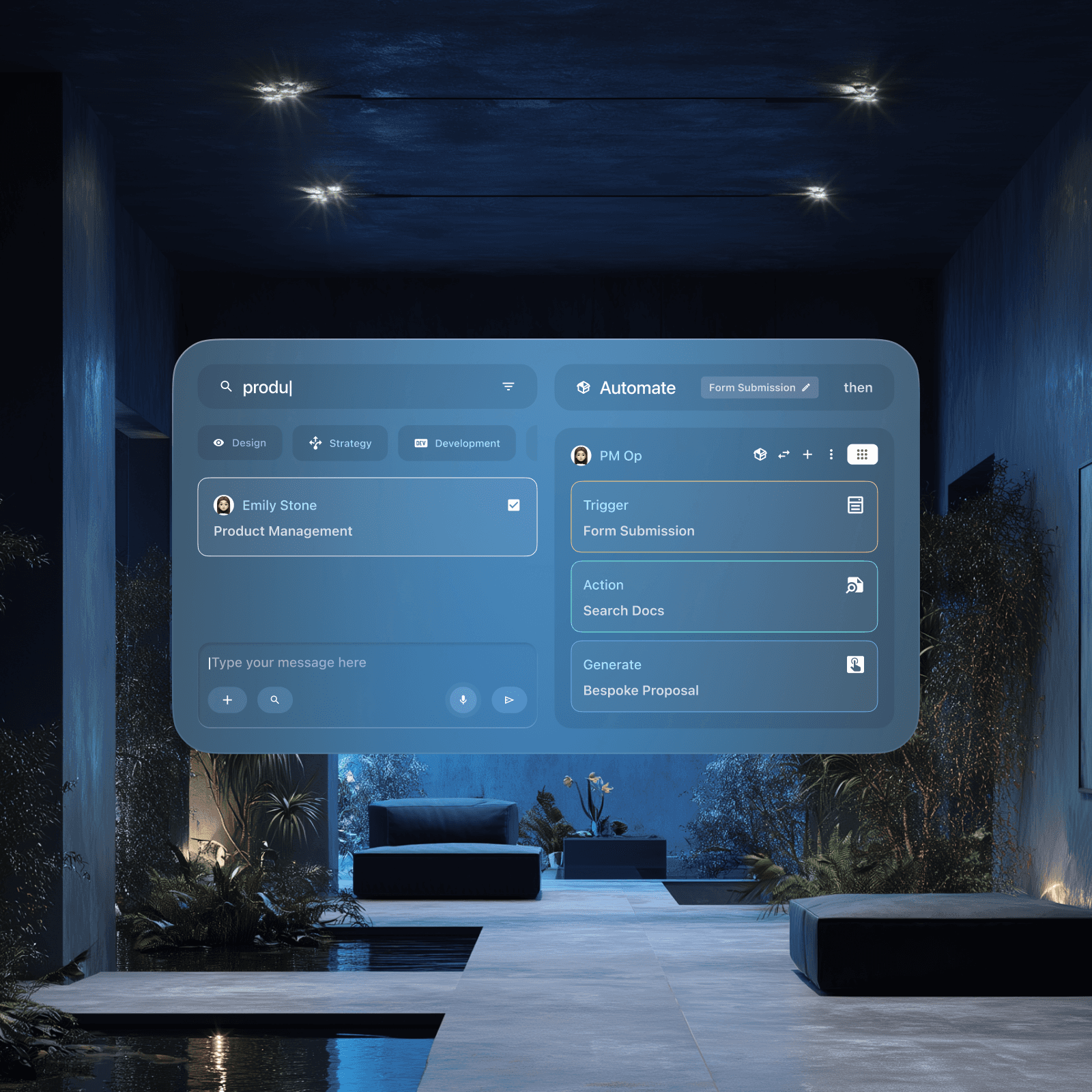
Early iterations resembled a standard SaaS dashboard with sidebars and tables. However, testing with power users showed they ignored the UI and just wanted a "Command-K" style search bar.
Mapping the User Flows
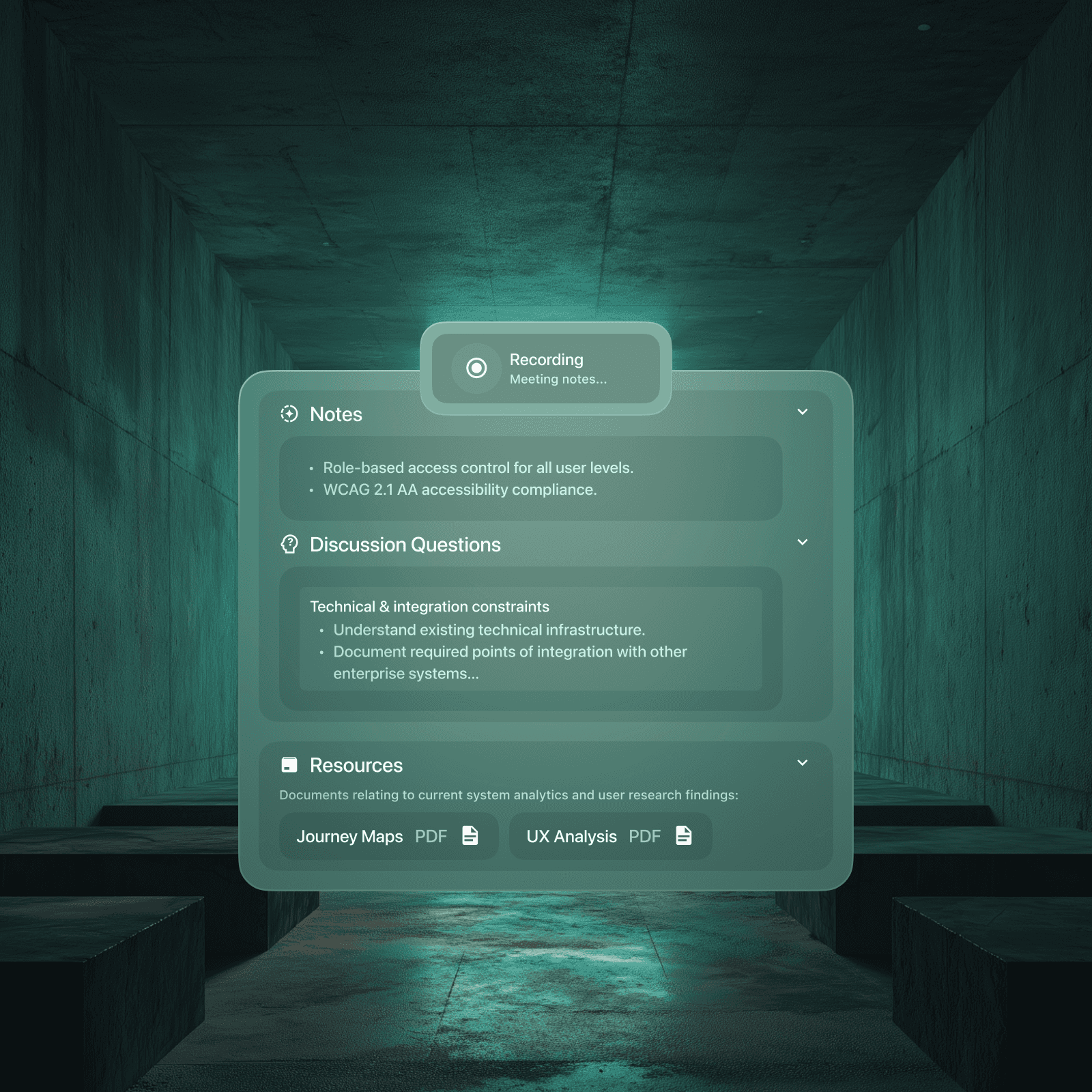
Driven by action-oriented triggers rather than traditional menus, the platform leverages AI to streamline complex tasks—instantly synthesizing ambient meeting audio into structured, actionable insights and translating real-time code into interactive, AI-assisted live previews.
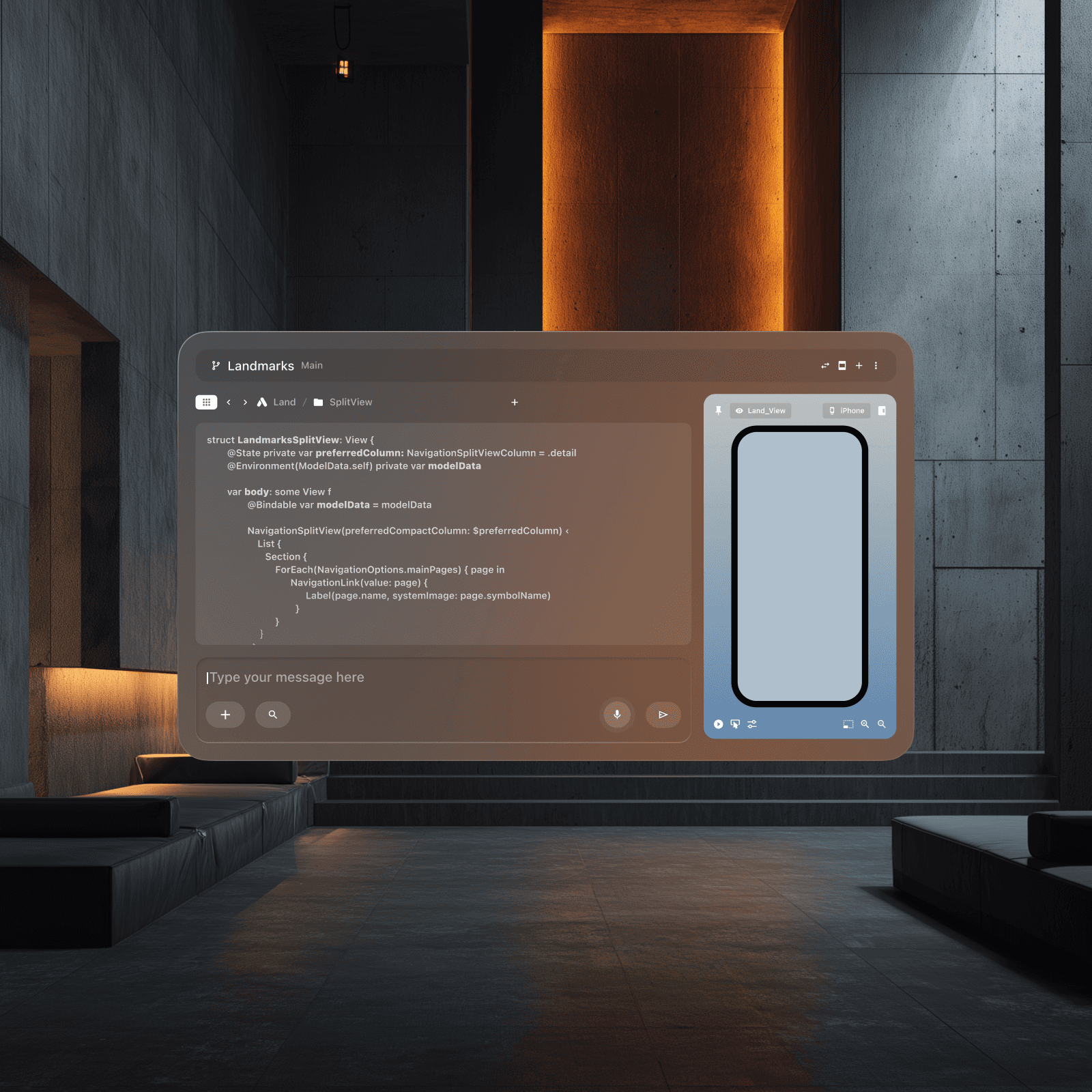
Interface Solutions & Spatial Design
Designing a "floating" OS required a radical departure from flat material design. Designing for Depth and Immersion The interface utilises Glassmorphism 2.0. By using heavy background blurs, multi-layered shadows, and subtle inner borders, the cards feel physically grounded in 3D space. This is crucial for the "Dark Mode" aesthetic (Screen 3), where neon accent colours (Cyan for Dev, Blue for PM) are used to indicate active states without overwhelming the user. The typography is kept strictly utilitarian (Inter/San Francisco) to ensure legibility against complex, variable backgrounds.